
Training for Staff
Deliverable 2.1 Training Material for Staff
1ST staff TRAINING WORKSHOP UNDER THE BUILDING CAPACITY IN PLANT BREEDING AND BIOTECHNOLOGY EDUCATION AND RESEARCH THROUGH PARTNERSHIP PROGRAM IN AFRICA, THE MIDDLE EAST, AND EUROPE FOR AGRICULTURAL TRANSFORMATION (BREEDTECH) INITIATIVE
1. INTRODUCTION
2. TRAINING COURSE
• Spray-Induced Gene Silencing (SIGS): principles, mechanisms, risk assessment, formulation strategies, and practical application for disease control.
• CRISPR-based genome editing: theoretical foundations, sgRNA design, gene targeting strategies, protoplast isolation and transformation, mutant screening, and validation.
• Phenomics: advanced plant phenotyping tools for stress tolerance and disease resistance screening.
• Genomic selection: models, statistical methods, and data integration for predictive breeding.
• Nanocarrier technologies: encapsulation and delivery systems for RNA molecules and other bioactive compounds.
• Plant resilience assessment: measurement of physiological responses under biotic and abiotic stresses.
Day 1: Phenomics, Spray-Induced Gene Silencing, and Genomic Selection
The training started with a session on Phenomics, delivered by Dr. Aakash Chawade, covering advanced plant phenotyping technologies and their application in breeding for disease resistance and stress tolerance. Dr. Katie Stevens introduced Spray-Induced Gene Silencing (SIGS), providing a broad overview of the technology, mechanisms of RNAi, and risk assessment considerations. She also highlighted its role in sustainable crop protection and demonstrated practical examples, including potato late blight control. The afternoon concluded with Dr. Alexandre Aono’s lecture on Genomic Selection, presenting key models, statistical methods, and perspectives on its integration into modern breeding programs.
Day 2: Spray-Induced Gene Silencing and genomic selection theories & Lab session
Tuesday began with a SIGS mechanisms recap and open discussion led by Dr. Katie Stevens, reinforcing core concepts from the previous day and addressing participant questions. This was followed by Dr. Bekele Gelena Kelbessa’s SIGS Theory & Lab session, where participants learned about dsRNA synthesis, nanoparticle encapsulation strategies, and delivery methods for plant-pathogen systems and lab sessions. After lunch, Dr. Alexandre Aono continued his training on genomic selection, focusing on model refinement and data integration. The day ended with an extended SIGS laboratory session, where participants gained hands-on experience with RNAi experiments in potato, including preparation, application, spraying, and observation of effects.
Day 3: Borgeby Faltdagar, a Major Agricultural Innovation Field Event
On Wednesday, participants attended Borgeby Fältdagar, a major agricultural innovation field event. They explored demonstration trial fields from breeding companies, technology providers, and universities, observing the latest developments in crop improvement, agricultural machinery, and digital farming tools. This visit provided real-world exposure to applied innovations and networking opportunities with industry stakeholders.
Day 4: Nanocarriers: From Theory to Practice
On Thursday, the day began with Dr. Naga Charan’s session on Nanocarriers: From Theory to Practice, exploring the design, characterization, and application of nanocarriers for agricultural purposes, particularly for improving SIGS efficiency. This was followed by Dr. Awais Zahid’s lecture on Quantifying Plant Resilience under both biotic and abiotic stresses, including physiological measurement techniques and lab session. After lunch, Dr. Selvaraju Kanagarajan led a two-part CRISPR training, beginning with CRISPR Theory, including sgRNA design and gene-editing strategies. This was followed by a hands-on lab, where participants performed protoplast isolation and transfection, mutant screening, and molecular validation techniques, based on the provided CRISPR lab protocols.
Day 5: Advanced CRISPR Theory & Lab
Friday continued with Dr. Kanagarajan’s Advanced CRISPR Theory & Lab. Participants deepened their knowledge of multiplex gene editing, off-target analysis, and advanced screening workflows. Practical sessions allowed them to apply techniques learned earlier in the week, consolidating skills in plant molecular biology and genome editing. The course concluded with a closing session, followed by a networking dinner, allowing participants and trainers to exchange experiences and discuss future collaborations.
3. CONCLUSION
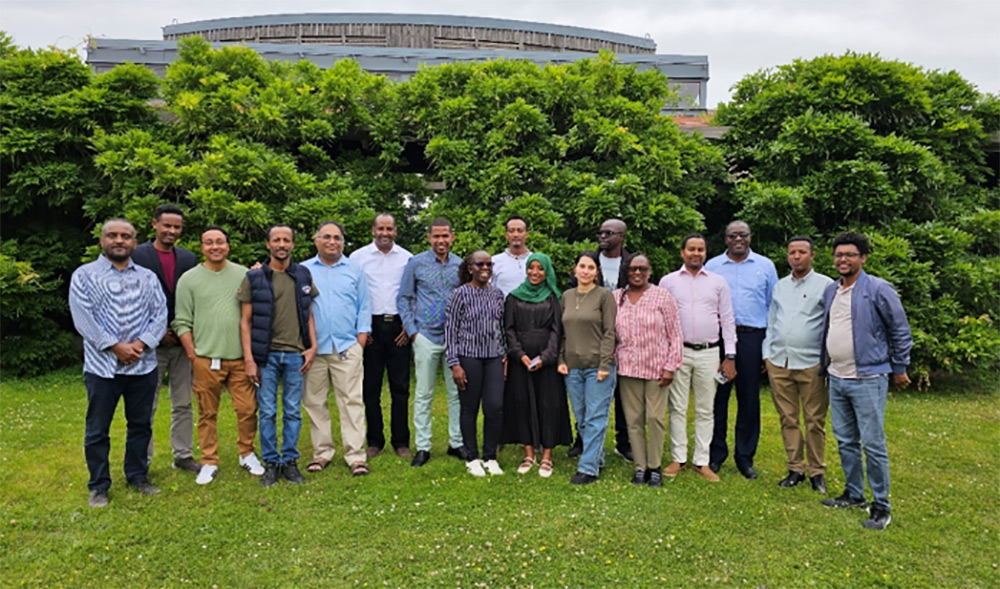
1st Staff Training June 2025, SLU Sweden
2nd staff TRAINING WORKSHOP UNDER THE BUILDING CAPACITY IN PLANT BREEDING AND BIOTECHNOLOGY EDUCATION AND RESEARCH THROUGH PARTNERSHIP PROGRAM IN AFRICA, THE MIDDLE EAST, AND EUROPE FOR AGRICULTURAL TRANSFORMATION (BREEDTECH) INITIATIVE
1. INTRODUCTION
2. TRAINING COURSE
Day 1: Advanced Principles of Genetics
Monday opened with participant registration, followed by formal welcoming remarks and introductory presentations. Representatives from the ISP introduced the organizing institutions, the training team, and presented the main objectives and expected outcomes of the workshop. Subsequent sessions featured a series of lectures dedicated to the advanced principles of genetics, organized into three thematic modules designed to progressively strengthen participants’ conceptual understanding: (i) the uniqueness of the genetic approach, (ii) the link between genotype and phenotype and the molecular role of DNA, and (iii) the application of genetic markers and genetic mapping. These lectures were delivered throughout the day, with the final component partially postponed to the following morning to allow sufficient time for in-depth discussion and comprehension By the end of Day 1, participants had established a strong foundational understanding of key genetic concepts, which set the stage for the more specialized topics to be covered in the subsequent days.
Day 2: Mapping Populations
On Tuesday the program seen continuation of lectures from the previous day, focusing on mapping populations and their application in identifying genetic factors associated with plant stress responses. A practical demonstration showcased the use of a maize multi-parental mapping population to investigate genetic determinants influencing cuticle-mediated permeability and stomatal density, serving as proxy traits for drought tolerance. Following this, participants were introduced to the principles of agricultural meteorology, emphasizing the influence of weather and climate on crop production and their integration into modelling frameworks to support data-driven agricultural decision-making. Key topics included climate–crop modelling, soil water balance assessment using the AquaBEHER tool, and methods for defining the wet season calendar. A hands-on case study demonstrated the use of AquaBEHER for seasonal forecasting and planting decision support, illustrating the practical value of these modelling tools in optimizing crop management. Subsequent sessions addressed genetic variation, agrobiodiversity, and agroecology, with discussions centred on leveraging biodiversity to enhance the economic, social, and environmental sustainability of agricultural systems. This module was complemented by two applied case studies: (i) a holistic breeding approach to address agroecological complexity through plant and environment interactions, and (ii) the use of chickpea cultivar mixtures to improve yield stability under variable environmental conditions. The day concluded with a seminar on the application of crop models for agrobiodiversity analysis, reinforcing the integration of modelling approaches into biodiversity research.
Day 3: Plant Genomics
On Wednesday lectures provided an in-depth exploration of plant genomics, examining the organization and structural characteristics of nuclear and organelle genomes. Key genomic elements such as protein-coding genes, repetitive DNA sequences, and transposable elements were discussed in the context of their functional significance in plant genomes. In the second part of the morning, the focus shifted to transcriptomics, emphasizing the roles of coding and non-coding RNAs in gene regulation and cellular function. Following the theoretical lectures, a hands-on bioinformatics practical session was conducted to consolidate and apply the genomic and transcriptomic concepts introduced. Participants were trained in key computational workflows, including sequence data quality assessment, alignment of sequencing reads to reference genomes, and DNA variant calling. To complement these exercises, two applied case studies “From Genomes to Pangenomes” and “Environmental DNA Typing” were presented, illustrating how bioinformatics tools are utilized to address real-world research questions in genomics.
Day 4: Trait–Genotype Association Analysis
On Thursday participants were guided in the field of trait–genotype association analysis through a blend of theory and intensive practice. The morning began with an in-depth overview of the theoretical foundations and biological relevance of identifying genetic markers linked to phenotypic traits. Key methodologies were introduced, particularly Genome-Wide Association Studies (GWAS) and Quantitative Trait Loci (QTL) mapping, to explain how genetic variation can be statistically associated with observable traits. These conceptual foundations prepared participants for a practical, hands-on exercise using the TASSEL software platform to perform association mapping. In the hands-on module, trainers guided participants through a full GWAS workflow. This included installing and configuring the TASSEL software, performing quality control checks on genotype datasets, and conducting relatedness analyses such as computing kinship matrices, performing principal component analysis (PCA), and generating multidimensional scaling (MDS) plots to account for population structure. The session concluded in executing a GWAS within TASSEL, where participants ran analyses to identify DNA markers associated with specific traits from a sample dataset.
Day 5: Future of Genomics-Based Breeding
On Friday, lectures focused on exploring the future of genomics-based breeding, integrating the concepts and skills developed throughout the week into a forward-looking perspective on modern crop improvement. Building upon the analytical frameworks introduced in the previous sessions, the morning began with discussions on how GWAS, genomic prediction, and genome editing can be strategically applied to accelerate genetic gains and address emerging agricultural challenges. The session emphasized how these advanced genomic tools, when appropriately adapted, can enhance crop resilience, yield stability, and resource-use efficiency, particularly within smallholder and resource-limited farming systems.
3. CONCLUSION