
Facilities Upgrade
Research and Laboratory Facilities Upgrade
Building Capacity in Plant Breeding and Biotechnology Education and Research through Partnership Program (BREEDTECH) is dedicated to advancing innovative research and solutions that tackle the pressing issues of sustainable agriculture and climate resilience in Africa and the Middle East. The project activities include training and curriculum development, as well as support in identifying and setting up key laboratory facilities to support training endeavors in Higher Education Institutions (HEIs) in Kenya, Ethiopia, and Palestine.
First: KENYA
Egerton University (Kenya)
Egerton University (Kenya) undergo extensive upgrades and acquisitions to enhance its research and teaching infrastructure. Planned improvements included the refurbishing of both the glasshouse and greenhouse, addressing broken glass, malfunctioning thermal and water control systems, and replacing the torn polythene cover. Partitioning of the greenhouse to accommodate various users, while installation of solar-powered exhaust fans and a new perimeter fence would ensure optimal conditions and security for ongoing research. Additionally, repairs to the rain shelter, including re-roofing and restoration of wheel rails, will maximize its utility for researchers. The molecular laboratory is also scheduled for general maintenance and refurbishing of benches, walls, ceilings, and sinks to support molecular research activities.
EGU BREEDTECH CENTER 1 – Rainout Shelter
The repair costs for the rain shelter included re-roofing, restoration of wheel rails, and painting to ensure effective and efficient operation for drought stress–simulation trials, water stress breeding trials, and controlled soil fertility experiments across crops, as well as other controlled experimental needs.
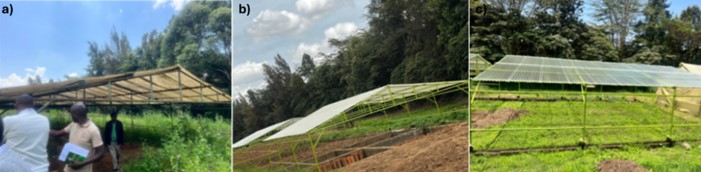
Figure 1: EGU BREEDTECH Center 1 at Egerton University, Kenya. (a) Old rain shelter before rehabilitation and (b)& (c) rehabilitated rain shelter. The upgrades included re-roofing, restoration of wheel rails, and painting
EGU BREEDTECH Center 2 – Glasshouse
The refurbishing of the glasshouse included replacing the broken glass, malfunctioning thermal and water control systems. The glasshouse had not been used for last 3years due to breakage and lack of replacement of broken parts, hence its refurbishing will enhance screening of germplasm, pathology studies, Early generation seed multiplication, population advancement from breeding of wheat, chickpea, maize, potatoes, pigeon peas etc for researchers, Postgraduate and under graduate research project work from Egerton University.
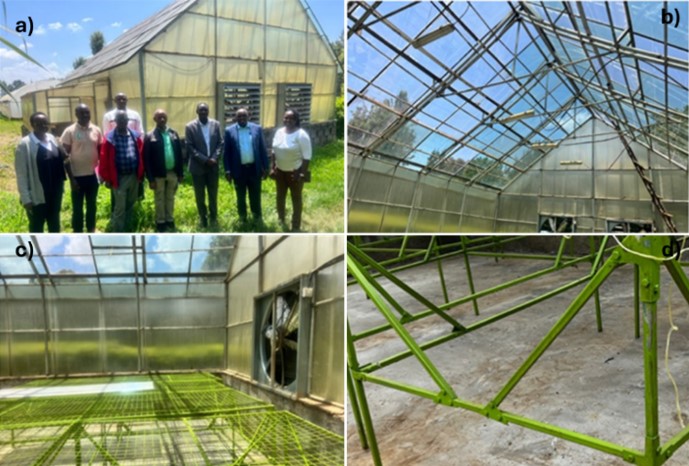
Figure 2: BREEDTECH Center 2 (a) The glasshouse status during site handover to the contractor; (b) Replaced glass panes; (c) Refurbrished benches and (d) Concrete floor
EGU BREEDTECH center 3-Crop Evaluation center
The BREEDTECH evaluation center consists of a refurbished greenhouse, 2 breeding cages, open field and an irrigation facility. The greenhouse upgrade included replacement of the torn polyethylene cover and partioning of the structure to accommodate multiple users. In addition, solar-powered exhaust fans and shade nets were installed to improve ventilation and temperature regulation.
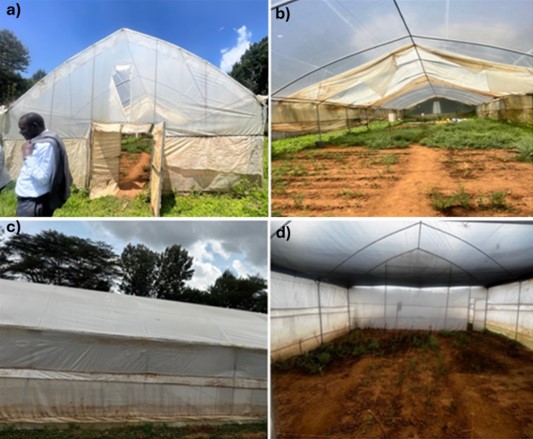
Figure 3: BREEDTECH evaluation center 3 ; greenhouse before and after upgrading. Panels (a–b) show the greenhouse before the upgrade, while panels (c–d) show the greenhouse after the upgrade, including the refurbished structure and improved facilities.
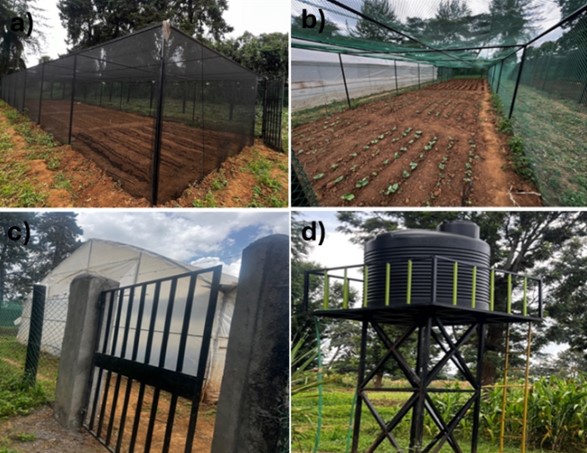
Figure 4: BREEDTECH Evaluation Center 3: breeding evaluation site. Panels (a–b) show the breeding cages after refurbishment; (c) shows the fencing of the facility; and (d) shows the installed irrigation system, including the raised water tank.
EGU BREEDTECH Center 4- Molecular and Pathology Lab Improvement
General laboratory maintenance, was done including benches, walls, ceilings, and sinks, was carried out to support molecular, plant breeding, and crop protection research activities. In addition, essential chemicals and reagents were procured, enabling students to actively conduct their research. To enhance security, a new perimeter fence was installed around the facility.
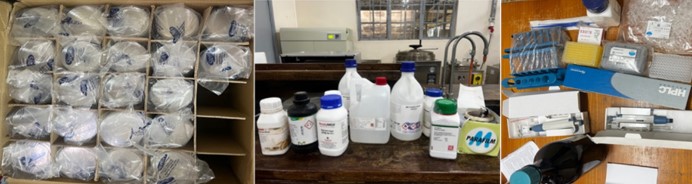
Figure 5: BREEDTECH Center 4. Pictures show the various laboratory consumables that were purchased. With these acquisitions, the laboratory is now fully operational and ready for routine experimentation
Laikipia University
LU BREEDTECH Center 5-Green House
The acquisitions at Laikipia University include a variety of equipment and resources aimed at enhancing the institution’s molecular and general laboratory capacities. Among the items procured are one greenhouse dedicated to acclimatization and the cultivation of plants, as well as the ongoing refurbishment of the rain shelter to provide a screen shade for raising plants under controlled sunlight, thereby improving water retention and environmental protection. The University purchased key molecular biology equipment, including a greenhouse, incubator with shaker, water bath, centrifuge, gel imaging system, vortex mixer, pipettes, and basic lab reagents. The installed molecular equipment is now in use by undergraduate students studying molecular biology and genetics, and will be utilized by incoming MSc. Plant Pathology postgraduates in September 2025.
LU BREEDTECH Centers 5-6
This center includes the Greenhouse and refurbished rain shelter which will support plant propagation, acclimatization, and controlled experiments, enabling year-round practical training and research. The screened shading will regulate sunlight exposure, improve water retention, and protect plants from harsh environmental conditions.
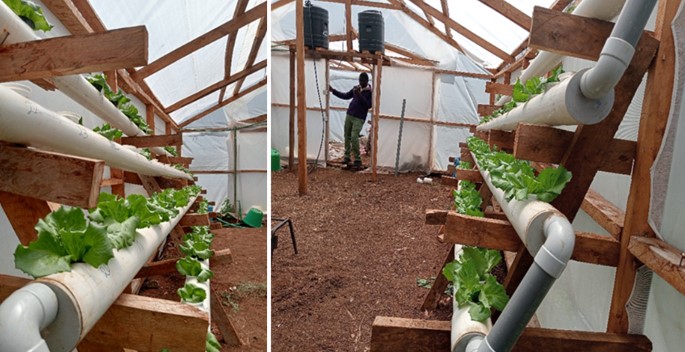
Figure 6: Breedtech Experimental Greenhouse Showing Hydroponics Systems Established for Undergraduate Student Experiments.
CH Center 6-Molecular Laboratory Equipment and Consumables
This equipment forms the backbone of hands-on molecular biology training and basic research activities. The other items include an incubator with a shaker, a water bath, and a refrigerated centrifuge. Additional equipment comprises a gel electrophoresis system, a gel imaging system, and a vortex mixer. The laboratory is also equipped with a 20 kg liquid nitrogen jar, pipettes with a volume range of 1–1000 µl, and racks for DNA and PCR tubes. These are pending delivery.
Laboratory consumables were also purchased to kick-start laboratory operations and ensure the facility remains fully functional and capable of delivering practical training. These included assorted PCR kits, as well as agarose gels and stains for routine molecular analyses and sample preparation.
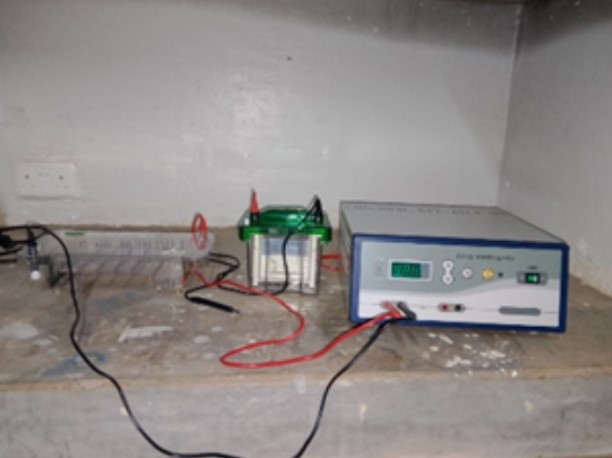
Figure 7: Gel Electrophoresis, Currently Being Run by the Biomedical Science Students
Second: ETHIOPIA
Haramaya University
HU BREEDTECH Center 7
Following Items have been proposed for purchase under the BREEDTECH project to equip the Biotechnology lab at Haramaya University. These include a Gel Imaging System, as the existing gel documentation system is outdated and malfunctioning, necessitating a new unit. The expansion of the Biotechnology lab and the establishment of a genetic engineering lab also require a dedicated laminar airflow system. To meet the storage needs for molecular reagents and cell cultures, a vertical refrigerator, currently unavailable in the lab, has been proposed. Additionally, high-configuration laptops are needed for researcher involved in computational work. The genetic engineering lab is to be further equipped with a thermocycler (PCR machine) for molecular activities, as well as a microcentrifuge, which is essential for working with DNA, RNA, and proteins. A separate -20°C refrigerator is also required for the new lab. Finally, mini and midi electrophoresis units are needed to support simultaneous research activities for multiple students in both the existing biotechnology lab and the new facility.
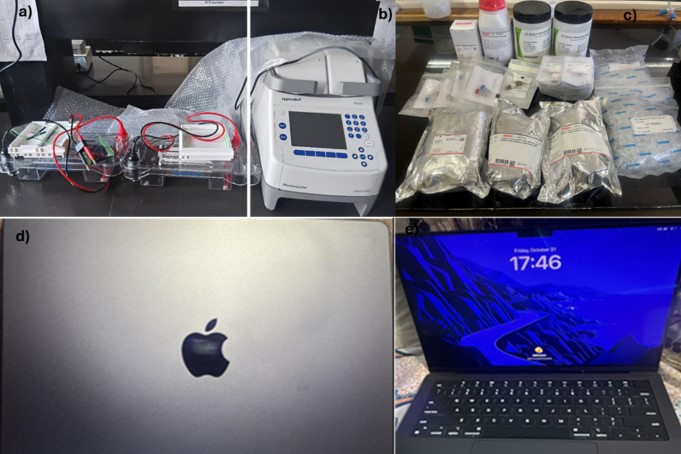
Figure 8: Equipment purchased at Haramaya University, Ethiopia. a) Mini and Midi gel electrophoresis units, used for the separation of DNA and RNA in a semi-solid agarose gel matrix; b) Thermal cycler (PCR machine), used to amplify DNA in vitro; c) Molecular biology reagents; d) Laptop (MacBook), used by researchers for data analysis generated from laboratory and field experiments.
Oda Bultum University
OBU BREEDTECH Center 8
Oda Bultum University has proposed to purchase Seven-laboratory equipment’s planned on BREEDTECH Project. The materials were proposed to upgrade the facility of the plant science laboratory that can support postgraduate, undergraduate and research in the areas of Plant Breeding, Plant Pathology and Biotechnology related disciplines. As Oda Bultum University, have been purchased some of the planned equipment such as Biological Safety (Laminar Flow Cabinet), Mini Centrifuge with 6 Slot Rotor – 6000 RPM, Laptops, Mini Portable Flake Ice Maker.
Third: PALESTINE
An-Najah NaFonal University
ANNU BREEDTECH Center 9 – The Virtual Reality Lab
An-Najah Na:onal University has procured a complete suite of as part of the BREEDTECH initiative. This includes VR headsets (Meta Quest 3) and immersive VR soPware tailored to biotechnology and plant breeding simulations, interactive digital display panels, and networking infrastructure. The purpose of this equipment is to create an advanced VR lab to support education and research in plant breeding and biotechnology. The lab allows students to visualize and interact with complex biological and genetic concepts in a simulated environment, reducing reliance on physical lab resources. This immersive experience enhances comprehension and engagement while providing a safe, cost effective, and scalable method for training. The VR lab supports remote learning, promotes collaboration among consortium partners, and prepares students with digital competencies essential for future careers in agri-tech and biosciences.
With the VR lab fully installed and operational, the next phase focuses on expanding its integration into teaching, research, and cross-institutional collaboration under BREEDTECH. The lab will be embedded into undergraduate and postgraduate courses in plant breeding, molecular biology, and biotechnology.
Planned uses include virtual simulations of gene editing, remote collaboration with partner universities, and capacity building workshops for faculty and students. It will also support thesis research and development of virtual training modules for regional use. The VR lab will play a central role in supporting innovative education and will help position An-Najah Na:onal University as a leader in applying immersive technologies in agricultural sciences.
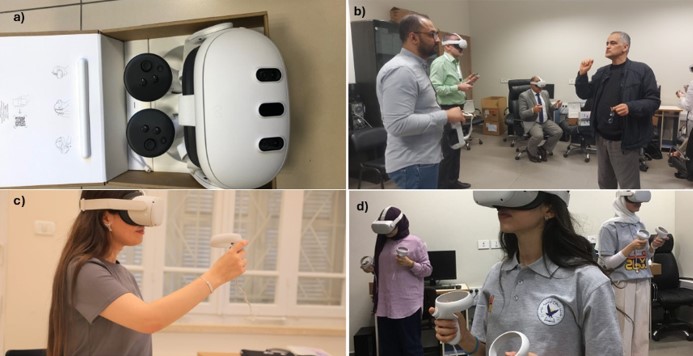
Figure 9: Virtual Reality Laboratory Equipment and Applications.
Al Quds Open University
QOU BREEDTECH Center 10
Al-Quds Open University (QOU) has identified the need for equipment such as a gel electrophoresis apparatus, nano-spectrophotometer, water distillation system, liquid nitrogen jar, reagents, chemicals, and other instruments to primarily support the research activities of its researchers and thesis students. These resources will enhance the capacity of QOU researchers in molecular breeding and biotechnology. Additionally, equipment like a grain seed thresher and seed counter will bolster ongoing classical breeding research. All items will be accessible for educational purposes, enabling students to conduct small-scale experiments in the laboratory. Some students will also have the opportunity to undertake research thesis projects using these facilities. As a result, the research and educational capacities of students, researchers, and faculty members will be significantly strengthened.
The equipment will be integrated into the educational process for undergraduate students in the Faculty of Agriculture. These resources will support practical sessions across various courses, including genetics and principles of plant breeding. Additionally, students will have the Opportunity to conduct thesis research in molecular genetics, breeding, or molecular breeding—Opportunities that were not previously available. Furthermore, the equipment will be accessible to QOU researchers, significantly enhancing research quality and enabling advanced studies in molecular genetics and breeding.
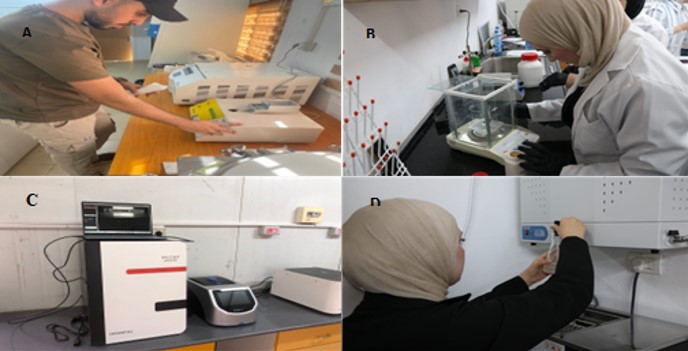
Figure 10: installation and use of different equipment by students and staff ; (A) seed counter, (B) Balance, (C) labtop for gel Picture capture, and (D) water distillater system.
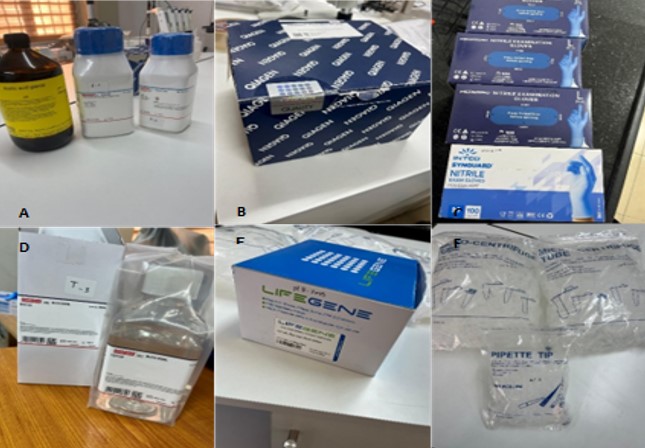
Figure 11: different reagents (A, B and D) and instruments (C,E, and F) obtained through BREEDTECH project and will contribute to research centers activation.
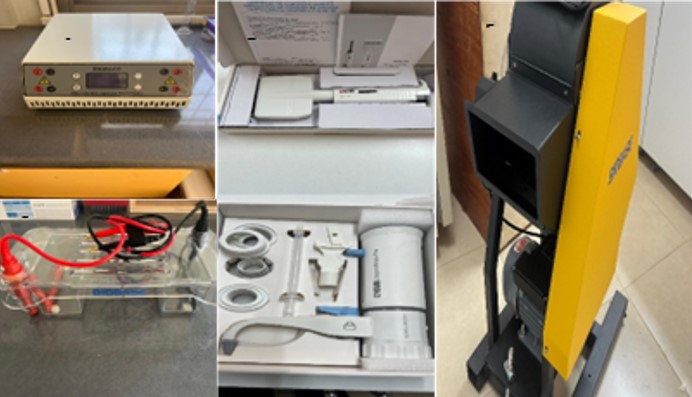
Figure 12: Other equipment and instrument obtained by BREEDTECH project
Impact and Achievements at Partners’ Universities:
All equipment and reagents procured under the BREEDTECH project have been successfully installed and are fully operational in the laboratories and centers. These instruments and equipment will support training and research for BSc and MSc students. . Collectively, these facilities enhance teaching quality, bolster student research capacity, and advance biotechnology research across the College of Agricultures and other colleges at partner universities in three countries.